
Constructing the Practice of Pedagogical Documentation and Progettazione

On Saturday, March 14th, educators in Calgary gathered for the workshop Constructing
the Practice of Pedagogical Documentation and Progettazione, a collaborative event
organized by Little Heartprints Academy and Free to Be Kidz, in partnership with the
Calgary Reggio Network Association. The event also welcomed participants from the
Mentoring and Networking Program of the Calgary Reggio Network Association, a
program designed to support educators who wish to deepen their understanding of the
Reggio Emilia approach while fostering connections among educators across the city. As
part of this initiative, the workshop also served as an opportunity to strengthen a growing
community of educators committed to reflective and collaborative practice.
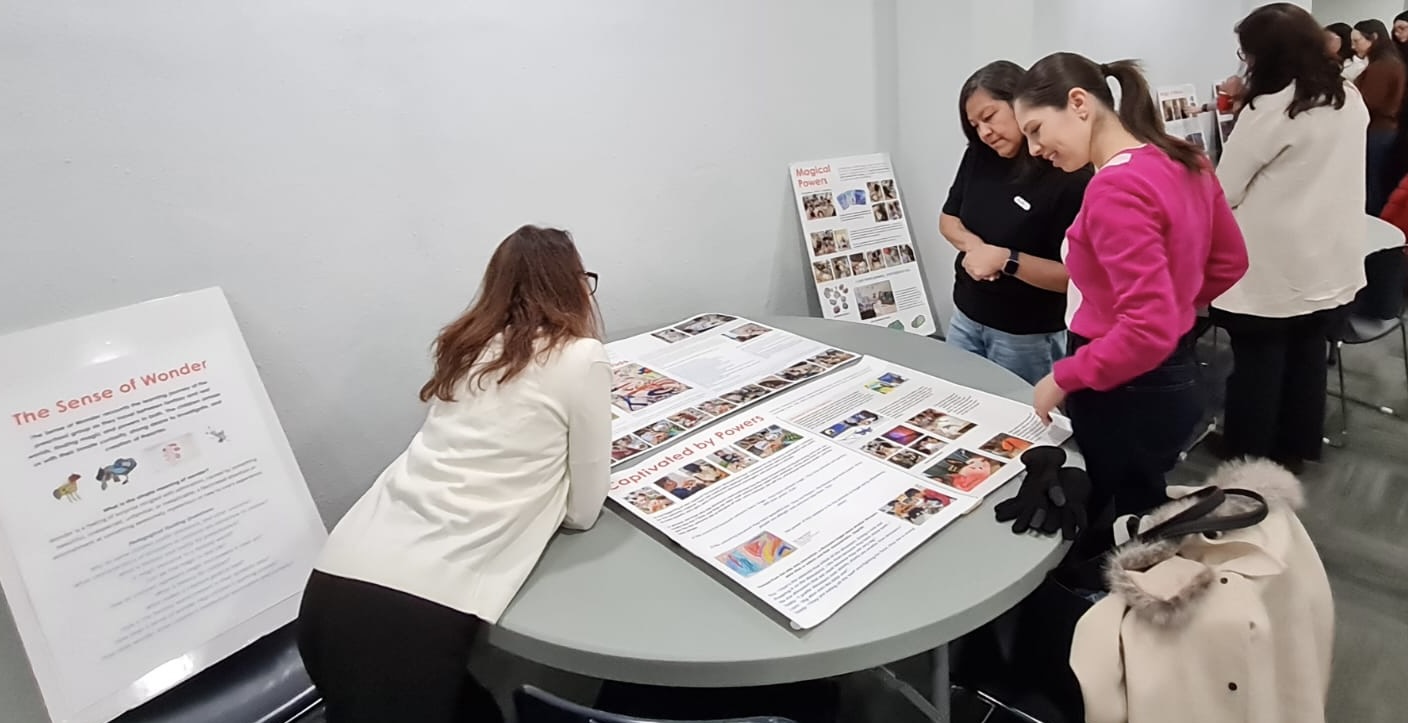
The participants came together to deepen their understanding of pedagogical
documentation and progettazione through dialogue and reflective practice. The workshop
invited educators to engage with curated documentation from previous pedagogical
exhibitions prepared by the two centres. These materials became a starting point for
collective interpretation, reflection, and discussion.
Inspired by the ideas of Carla Rinaldi, participants reflected on documentation as a living
pedagogical practice—one that is not meant to close inquiry but to keep it open. As Rinaldi
reminds us, “Documentation is not about what we do, but what we are searching for.”
Documentation, in this sense, embraces incompleteness and invites educators to remain
attentive to emerging ideas and children’s theories.
The concept of progettazione, central to the educational experience of Reggio Emilia, was
explored as a flexible and collaborative process of educational design. Rather than
following predetermined plans, progettazione responds to what emerges through
observation, listening, and interpretation.
Throughout the morning, educators engaged in thoughtful conversations about the
pedagogy of listening, the importance of honouring children’s theories, and the role of
documentation as a tool for making learning visible and advocating for children’s rights.
Participants reflected on the image of the child as a capable and competent learner and
citizen.
Perhaps one of the most meaningful outcomes of the gathering was the recognition of the
value of these shared spaces—spaces to pause, reflect, be inspired, and learn together.
Participants expressed a strong desire for more opportunities like this within the Calgary
community, where educators can continue building relationships, exchanging ideas, and
nurturing a culture of pedagogical dialogue.